

How to Survive Watching Your Kids' Football in Freezing Weather
The match lasts 90 minutes. Your patience for the cold lasts about 15.
Introduction
Every football parent knows the feeling. You've shown up to support your kid, coffee in hand, full of enthusiasm - and then the cold hits. You're standing still on the sidelines, wind cutting through your jacket, while the kids on the pitch somehow look perfectly comfortable running around.
The difference? They're moving. You're not.
Standing still in cold weather is a completely different challenge from being active in it. Your body isn't generating heat, the wind has free access to every gap in your clothing, and before long all you can think about is getting back to the car.
Here's how to actually enjoy watching your kids play - instead of just surviving it.
Why standing still makes you so much colder
When you exercise, your muscles generate heat as a byproduct. That's why your kids look fine running around in shorts while you're shivering in a winter jacket.
When you stand still, that heat source disappears. Your body redirects blood flow away from your extremities to protect your core - which is why your hands and feet go cold first, even if your torso feels okay.
The solution isn't just wearing more - it's wearing smarter.
The layering system
The key to staying warm without bulking up is layers. Three of them.
Base layer - sits against your skin and manages moisture. Even if you're not moving much, your body still produces some sweat. A good base layer keeps you dry, which keeps you warm.
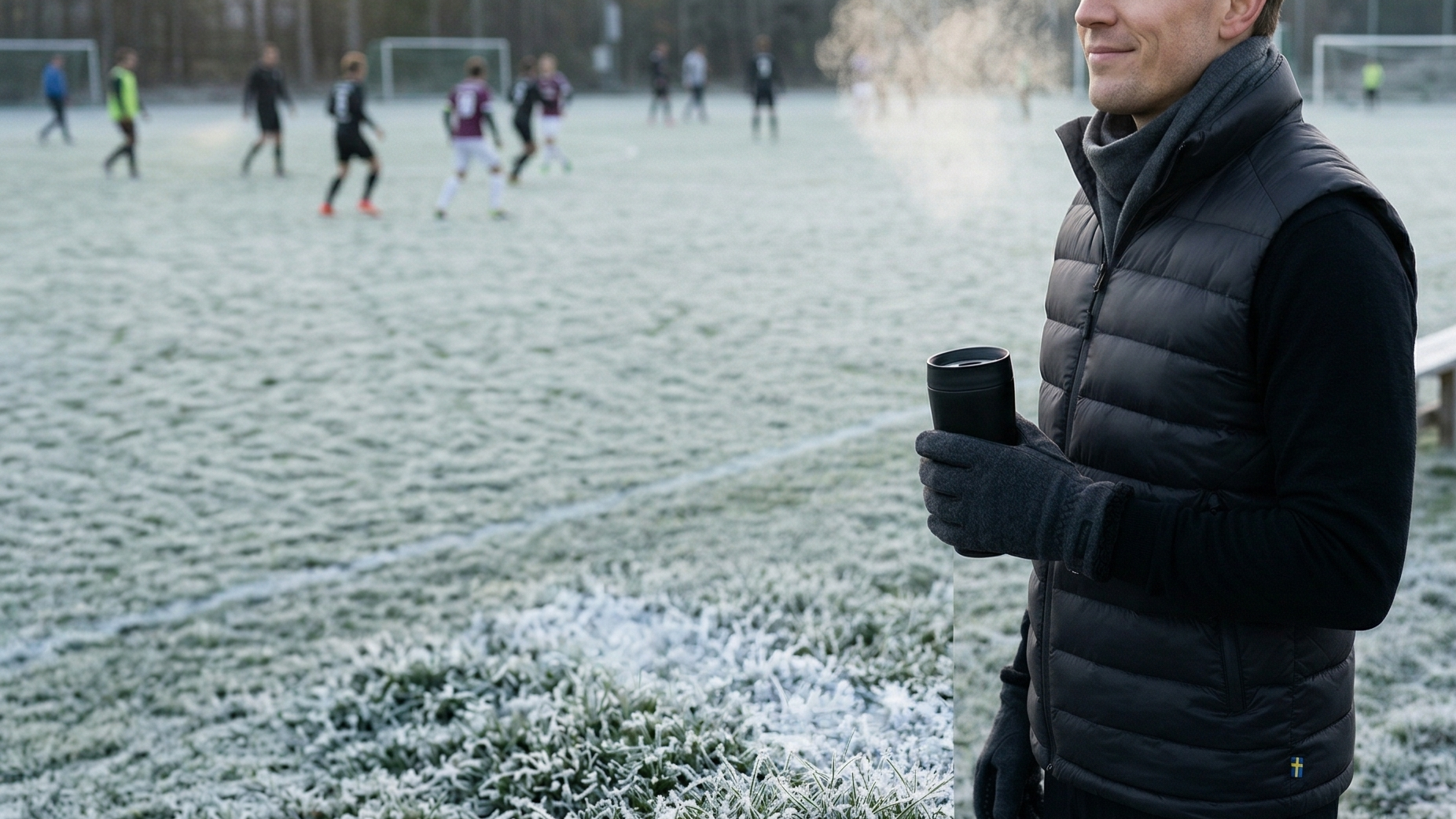
Mid layer - this is your insulation. A heated vest works perfectly here. It keeps your core warm without restricting movement, and because it focuses heat on your torso, your body naturally sends warmth to your arms and legs too.
Outer layer - blocks wind and rain. A good shell jacket stops the cold air from penetrating your other layers.
Most people skip the mid layer entirely and then wonder why they're cold. Don't skip the mid layer.
The four spots that make or break your warmth
1. Your core If your core is warm, your body will keep your hands and feet warmer naturally. A heated vest is the single most effective upgrade you can make.
2. Your hands Hands are the first to go. You need gloves that are actually designed for the cold - not just thin knitted ones. Heated gloves or well-insulated thermal gloves make an enormous difference.
3. Your feet You're standing on cold ground for 90 minutes. The cold travels up from below. Thermal insoles inside your shoes, combined with warm socks, block that ground chill effectively.
4. Your head and neck A significant amount of body heat is lost through your head. A beanie and a neck warmer are simple additions that have an outsized effect on how warm you feel overall.
Practical tips for match day
- Arrive warm - don't wait until you're already cold to start layering up. It's much harder to warm up than to stay warm.
- Bring a thermos - hot coffee or tea does wonders, not just for warmth but for morale.
- Move when you can - walk the sideline, stamp your feet, clap. Any movement helps.
- Wear more than you think you need - you can always take a layer off. You can't add one you left at home.
- Check the weather the night before - an extra five minutes of preparation saves an hour of misery.
The gear that actually makes a difference
You don't need to spend a fortune, but you do need the right pieces. The combination that works best for football parents:
- A heated vest under your jacket
- Thermal gloves
- Thermal insoles
- A warm beanie
That's it. Four items that transform the sideline experience completely.
Final thought
Your kid looks up to find you in the crowd. Make sure you're actually watching the match - not staring at your feet wishing you were somewhere warmer.
With the right gear, the cold stops being a problem and the match becomes the thing you're actually there for.
Ready to upgrade your sideline kit? Browse the Koltrast range →
Read more

We’ve all been there: the sun is out, the course is open, but the thermometer is barely cracking 4°C. You want to play, but by the fourth hole, your fingers are numb, your back feels like a rusted ...
You've invested in the right clubs. You've taken lessons. You practice your short game. But if you're playing in cold weather without thinking about temperature management, you could be throwing aw...
Leave a comment
This site is protected by hCaptcha and the hCaptcha Privacy Policy and Terms of Service apply.